
DIVERSIDADE FUNCIONAL EM PROJETOS DE CIÊNCIAS AMBIENTAIS
DOI:
https://doi.org/10.18554/acbiobras.v7i2.7998Keywords:
Ecological analysis; Species diversity; Ecosystem ecology; Environmental services.Abstract
A diversidade funcional em estudos de biodiversidade tem como objetivo entender as relações entres os organismos e os serviços ambientais que estes prestam ao ecossistema. Assim, compreender esta área tem sido de grande importância para pesquisadores de ciências ambientais, pois os resultados podem evidenciar o estado qualitativo do ambiente, a estrutura composicional das comunidades e também direcionar previsões sobre o futuro desta área analisada. Dentro desta perspectiva o trabalho objetivou apresentar as facetas que a diversidade funcional pode exibir em projetos de ciências ambientais. Para isso foi realizada uma revisão bibliográfica sobre os principais aspectos desta área e suas aplicações em diversos tipos de cenário ambientais. De forma geral, foi encontrados diversas aplicações em diferentes tipo de cenários e concomitante a isto diferentes tipos de dados, dentre os maiores destaques para dados relativos a riqueza de espécie e a relação destas espécies com diversos espectros do ambiente, como alimentação, posição geográfica no ambientes e diversos tipos de recursos, principalmente os relacionados a cadeia alimentar. Por fim, em termos gerais, a diversidade funcional não é a única forma de conduzir estas discussões, mas vem se mostrando como uma boa ferramenta na compreensão do funcionamento ecossistêmicos, compreendendo que as funções não são relacionadas às espécies e sim aos indivíduos, e que estes podem ser “monofuncionais” a “polifuncionais”.
References
Odum, EP. Ecologia. Rio de Janeiro: Guanabara Koogan, 1988.
Tilman, D. Functional Diversity. Encyclopedia of Biodiversity 2001, 3: 109-120. https://doi.org/10.1006/rwbd.1999.0154.
Ricklefs, RE. A Economia da Natureza. 5ª ed. Rio de Janeiro: Editora Guanabara Koogan, 2003.
Petry, AC; Pelicice, FM; Belline, LM. Ecólogos e suas histórias: um olhar sobre a construção das ideias ecológicas. Maringá: EDUEM, 2010. p. 61-88.
Darwin, C. On the origin of species. London: John Murray, 1859.
JOHNSTON, RF. Current Ornithology. Washington: Springer, 1995. p. 155-176.
Gomes, LN; Pinheiro, JR; Piorski, NM. Aspectos ecomorfolo?gicos da comunidade de peixes do estua?rio do rio Anil, Ilha de Sa?o Luis-MA. Boletim do Laboratório de Hidrobiologia. 2003; 16: 29-34. http://dx.doi.org/10.18561/2179-5746/biotaamazonia.v13n1p30-35.
Macarthur, RH; Wilson, EO. The theory of island biogeography. New Jersey: Princeton University Press, 1967.
Vannote, RL, Minshall GW, Cummins KW, Sedell JR; Cushing, CE. The river continuum concept. Canadian Journal of Fisheries and Aquatic Sciences. 1980; 37: 130-137. https://doi.org/10.1139/f80-017.
Paine, RT. Food web complexity and species diversity. American Naturalist. 1966; 100: 65-75.
Paine, RT. Trophic control of production in a rocky intertidal community. Ecology. 1969; 50: 950-961.
Stiling, P. Ecology: theories and applications. 4° ed. New Jersey: Prentice-Hall INC., 2002.
Tansley, AG. The use and abuse of vegetational concepts and terms. Ecology. 1935; 16: 284-307. https://doi.org/10.2307/1930070.
Elton, CS. Animal ecology. London: Sidgwick and Jackson, 1927.
Möbius, KA. Die Auster und die Austernwirthschaft. Berlin: Verlag von Wiegandt, Hempel & Parey, 1877.
Forbes, SA. On some interactions of organisms. Laboratory of Natural History Building. 1880; 1: 3-17.
Lovelock, JE. Letter to the Editors – Gaia as seen through the Atmosphere. Atmospheric Environment. 1972; 6: 579-580. https://doi.org/10.1016/0004-6981(72)90076-5.
Clements, FE. Plant Succession. An analysis of the development of vegetation. Washington: Carnegie Institution, 1916.
Gleason, HA. The Structure and Development of the Plant Association. Bulletin of the Torrey Botanical Club. 1917; 44(10): 463-481. https://doi.org/10.2307/2479596.
Weiher, E; Keddy, PA. Ecological Assembly Rules – Perspectives, advances, retreats. Cambridge: Cambridge University Press. 1999.
Sobral, FL.; Cianciaruso, MV. Estrutura filogenética e funcional de assembleias: (re)montando a ecologia de comunidades em diferentes Escalas espaciais. Bioscience Journal. 2012; 2(4): 617-631. Available from: https://seer.ufu.br/index.php/biosciencejournal/article/view/13491.
Funk, JL; Cleland, EE; Suding, KN; Zavaleta, ES. Restoration through reassembly: Plant traits and invasion resistance. Trends in Ecology and Evolution. 2008; 23(12): 695-703. https://doi.org/10.1016/j.tree.2008.07.013.
Gómez, JP; Bravo, GA; Brumfield, RT; Tello, JG; Cadena, CD. A Phylogenetic approach to disentangling the role of competition and habitat filtering in community assembly of Neotropical forest birds. Journal of Animal Ecology. 2010; 79(6): 1181-1192. https://doi.org/10.1111/j.1365-2656.2010.01725.x.
Mouchet, M; Villéger, S; Mason, NWH; Mouillot, D. Functional diversity measures: an overview of their redundancy and their ability to discriminate community assembly rules. Functional Ecology. 2010; 24(24): 867-876. https://doi.org/10.1111/j.1365-2435.2010.01695.x.
Mouillot, D; Graham, NAJ; Villeger, S; Mason, NWH; Bellwood, DR. A functional approach reveals community responses to disturbances. Trends in Ecology and Evolution. 2013; 28(3): 167-177. https://doi.org/10.1016/j.tree.2012.10.004.
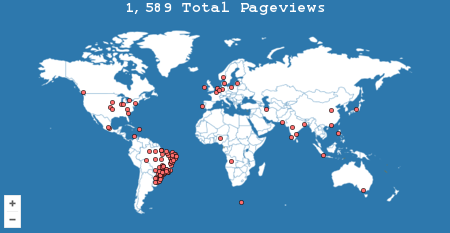
Downloads
Published
Issue
Section
License
The author(s) retain(s) the rights to the published material. However, publication automatically implies the transfer of copyright, without payment from the journal. The author(s) transfer(s) their economic rights (the right to publish, reproduce, distribute) to the journal. The author(s) do not receive(s) financial remuneration from the Acta Biologica Brasiliensia journal for publishing; the consideration is the dissemination of their work. The author retains authorship (moral rights), but, to publish, transfers or licenses the rights of commercial/economic exploitation (economic rights) to the Acta Biologica Brasiliensia journal, free of charge, making the article open access or, in traditional models, the property of the publisher.


 Revistas UFTM