COVID-19, pregnancy outcomes, and the risk of preterm birth
DOI:
https://doi.org/10.18554/refacs.8873Keywords:
Pregnancy complications, Coronavirus, Infant, Newborn, Premature birth, SARS-CoV-2Abstract
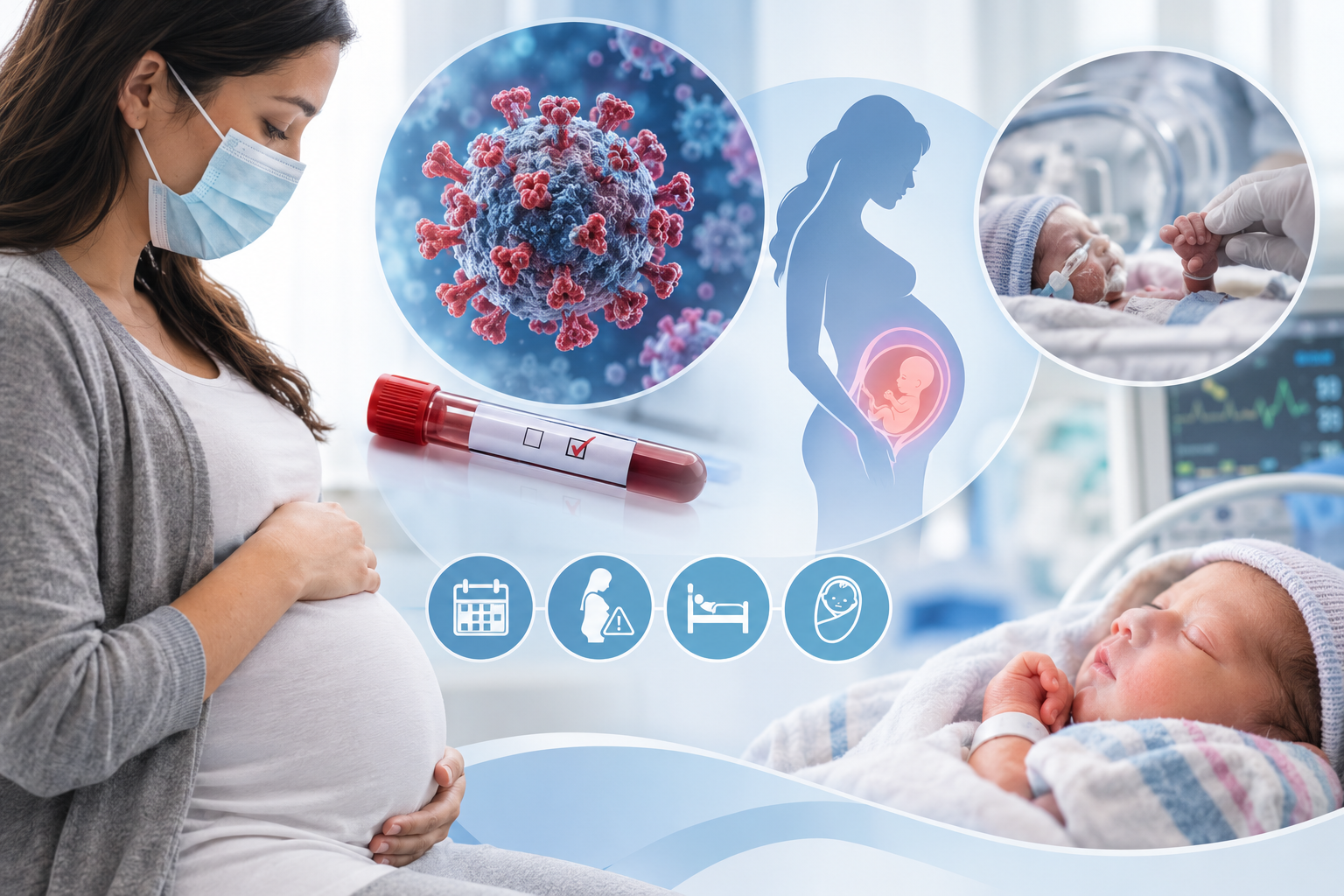
Objective: to characterize COVID-19 positive and negative pregnant women who gave birth and clinical outcomes, with an emphasis on the occurrence of premature births associated with SARS-CoV-2 infection. Methods: retrospective observational cohort study based on the analysis of medical records of pregnant women positive and negative for SARS-CoV-2 treated between January and December 2022, from which maternal and neonatal data were extracted (age, gestational age, type of delivery, etiology of prematurity, birth weight and APGAR score) and calculations of frequencies, proportions and measures of central tendency were performed to describe the outcomes related to the occurrence of premature births. Results: of 95 initially eligible records, 35 were from positive pregnant women and of these, 15 who gave birth at the institution, almost half presented premature birth, and all of these cases occurred in patients who tested positive for the infection. The majority of infections occurred in the first quarter of 2022, the period of circulation of the Ômicron variant. The main causes of prematurity were pre-eclampsia, high blood pressure and changes in amniotic fluid. Newborns born to infected mothers had, on average, adequate weight and good vitality levels in the first minutes of life. Conclusion: the occurrence of premature births was present among pregnant women diagnosed with SARS-CoV-2, highlighting the relevance of clinical monitoring of this population, but without direct evidence for SARS-CoV-2. The data reinforce the need for attention to maternal conditions during pregnancy and neonatal monitoring, especially in scenarios of viral infection.
References
1. Bhering NBV, Arndt CG, Gonçalves Filho DAP, Vita DTP, Chagas FRC, Gazzoni GAS, et al. O parto prematuro induzido pela covid-19: uma revisão da literatura. Braz J Health Revi. [Internet]. 2021 [citado em 20 jul 2025]; 4(2):4401-15. Disponível em: https://ojs.brazilianjournals.com.br/ojs/index.php/BJHR/article/view/25638.
2. Freitas-Jesus JV, Rodrigues L, Surita, FG. The experience of women infected by the COVID-19 during pregnancy in Brazil: a qualitative study protocol. Reprod Health. [Internet]. 2020 [citado em 09 set 2025]; 17(1):108. Disponível em: https://pubmed.ncbi.nlm.nih.gov/32641133/.
3. Granda-Orive J I, Martínez-García MA. What have we learnt from Covid-19 pandemia? Looking to the future. Pulmonology. [Internet]. 2023 [citado em 25 ago 2025]; 29(2):108-10. Disponível em: https://www.tandfonline.com/doi/full/10.1016/j.pulmoe.2022.08.006.
4. Yamayoshi S, Sakai-Tagawa Y, Koga M, Akasaka O, Nakachi I, Koh H, et al. Comparison of rapid antigen tests for COVID-19. Viruses. [Internet]. 2020 [citado em 14 ago 2025]; 12(12):1420. Disponível em: https://pubmed.ncbi.nlm.nih.gov/33322035/.
5. Ministério da Saúde [BR]. Covid-19 - Casos e Óbitos. [Internet]. Brasília (DF): Ministério da Saúde; 2025 [citado em 2 jan 2026]. Disponível em: https://infoms.saude.gov.br/extensions/covid-19_html/covid-19_html.html.
6. Li M, Wang H, Tian L, Pang Z, Yang Q, Huang T, et al. COVID-19 vaccine development: milestones, lessons and prospects. Signal Transduct Targeted Ther. [Internet] 2022 [citado em 10 set 2025]; 7(1):146. Disponível em: https://pubmed.ncbi.nlm.nih.gov/35504917/.
7. Silva LMG, Silva GV, Neves FS, Lopes GS, Lima ES. Fatores de risco à mortalidade materna durante a pandemia da COVID-19. Res Soc Dev [Internet] 2022 [citado em 15 set 2025]; 11(7):e3211729736. Disponível em: https://rsdjournal.org/index.php/rsd/article/view/29736.
8. Carbone L, Trinchillo MG, Girolamo RD, Raffone A, Saccone G, Iorio GG, et al. COVID‐19 vaccine and pregnancy outcomes: a systematic review and meta‐analysis. Int J Gynaecol Obstet. [Internet]. 2022 [citado em 10 set 2025]; 159(3):651-61. Disponível em: https://pubmed.ncbi.nlm.nih.gov/35810414/.
9. Akhtar H, Patel C, Abuelgasim E, Harky A. COVID-19 (SARS-CoV-2) infection in pregnancy: a systematic review. Gynecol Obstet Invest. [Internet] 2020 [citado em 07 jul 2025]; 85(4):295-306. Disponível em: https://pubmed.ncbi.nlm.nih.gov/32728006/.
10. Webinar ISPUP. Viver a prematuridade em tempos de pandemia [Vídeo da Internet]. Porto (PT): Instituto de Saúde Pública da Universidade do Porto (ISPUP); 2020 [citado em 2 jan 2026]. Vídeo 2h 4min. Disponível em: https://www.youtube.com/live/1SiyCCWvkgY.
11. Parto pretermo. In: Rotinas assistenciais da Maternidade Escola da Universidade Federal do Rio de Janeiro. [Internet]. Rio de Janeiro: Universidade Federal do Rio de Janeiro, Maternidade Escola; 2018 [citado em 2 jan 2026]. Disponível em: https://www.me.ufrj.br/images/pdfs/protocolos/obstetricia/parto_pretermo_1.pdf.
12. Wastnedge EAN, Reynolds RM, Boeckel SRV, Stoch SJ, Denison FC, Maybin JA, et al. Pregnancy and COVID-19. Physiol Rev. [Internet]. 2021 [citado em 14 ago 2025]; 101(1):303-18. Disponível em: https://pubmed.ncbi.nlm.nih.gov/32969772/.
13. Jamieson DJ, Rasmussen SA. An update on COVID-19 and pregnancy. Am J Obstet Gynecol [Internet]. 2022 [citado em 15 set 2025]; 226(2):117-86. Disponível em: https://pubmed.ncbi.nlm.nih.gov/34534497/.
14. Male V. SARS-CoV-2 infection and COVID-19 vaccination in pregnancy. Nat Rev Immunol. [Internet]. 2022 [citado em 27 jul 2025]; 22(5):277-82. Disponível em: https://pubmed.ncbi.nlm.nih.gov/35304596/.
15. Ministério da Saúde [BR]. HU Brasil [HC-UFTM]. Nossa História. [Internet]. Brasília (DF): HU Brasil; 2026 [citado em 2 jan 2026]. Disponível em: https://www.gov.br/ebserh/pt-br/hospitais-universitarios/regiao-sudeste/hc-uftm/acesso-a-informacao/institucional/nossa-historia.
16. Zorzetto R. A nova onda da ômicron. Rev Pesqui FAPESP. [Internet] 2023 [citado em 18 set 2025]; 323:49-51. Disponível em: https://revistapesquisa.fapesp.br/linhagens-da-variante-omicron-elevam-o-total-de-casos-de-covid-19-no-final-de-2022/.
17. Araf Y, Akter F, Tang Y, Fatemi, R, Parvez, MSA, Zheng C, et al. Omicron variant of SARS-CoV-2: genomics, transmissibility, and responses to current COVID-19 vaccines. J Med Virol. [Internet] 2022 [citado em 2 jan 2026]; 94(5):1825-32. Disponível em: https://pubmed.ncbi.nlm.nih.gov/35023191/.
18. Santos Filho A, Vieira L. Covid-19: flexibilização do uso de máscaras em áreas abertas: atualização. [Internet]. Goiânia (GO): CONECTA-SUS; 2022 [citado em 2 jan 2026]. Disponível em: https://docs.bvsalud.org/biblioref/2022/04/1363226/covid-19-flexibilizacao-do-uso-de-mascaras-atualizacao.pdf.
19. Rossetto M, Souza JB, Fonsêca GS, Kerkoff VV, Moura JRA. Flores e espinhos na gestação: experiências durante a pandemia de COVID-19. Rev Gaucha Enferm [Internet] 2021 [citado em 20 set 2025]; 42:e20200468. Disponível em: https://www.scielo.br/j/rgenf/a/ZbrT6M4fgdwrBQzFdJBHydy/abstract/?lang=pt.
20. Dang D, Wang L, Zhang C, Li Z, Wu H. Potential effects of SARS‐CoV-2 infection during pregnancy on fetuses and newborns are worthy of attention. J Obstet Gynaecol Res. [Internet] 2020 [citado em 5 set 2025]; 46(10):1951-7. Disponível em: https://pubmed.ncbi.nlm.nih.gov/32779309/.
21. Mendonça AM, Lumi MO, Madeira K, Araújo D. Perfil de pacientes com diagnóstico de trabalho de parto prematuro. Arq Catarin Med. [Internet] 2022 [citado em 9 set 2025]; 51(1):41-50. Disponível em: https://revista.acm.org.br/arquivos/article/view/871.
22. Ramiro NCMP, Pereira MS, Souza RS, Aver LA. Repercussões fetais e possíveis complicações da COVID-19 durante a gestação. Saude Colet. [Internet] 2020 [citado em 02 set 2025]; 10(54):2679-90. Disponível em: https://revistasaudecoletiva.com.br/index.php/saudecoletiva/article/view/738.
23. Belini RC. Complicações materno perinatais em gestantes infectadas pela covid-19: uma revisão integrativa de literatura. [trabalho de conclusão de curso]. Dourados, MS: Universidade Federal da Grande Dourados/UFGD; 2022. 29 p.
24. Antoun L, Nashwa ET, Ahmed I, Patni S, Honest H. Maternal COVID-19 infection, clinical characteristics, pregnancy, and neonatal outcome: a prospective cohort study. Eur J Obstet Gynecol Reprod Biol. [Internet] 2020 [citado em 9 jul 2025]; 252:559-62. Disponível em: https://pubmed.ncbi.nlm.nih.gov/32732059/.
25. Contreras BN, Elgueta NR, López AM, Bravo DM. Inducción de trabajo de parto en pacientes COVID-19: experiencia en el Hospital San Juan de Dios. Rev Chil Obstet Ginecol [Internet] 2020 [citado em 28 ago 2025]; 85(supl.1):S28-S34. Disponível em: https://www.scielo.cl/scielo.php?script=sci_arttext&pid=S0717-75262020000700006.
26. Rocha KNS, Alvim MS, Silva SFM, Mendes AA, Matos SRS, Oliveira GM. COVID-19: problems and care in childbirth, birth and postpartum. Braz J Health Rev. [Internet] 2022 [citado em 10 ago 2025]; 5(1):677-92. Disponível em: https://ojs.brazilianjournals.com.br/ojs/index.php/BJHR/article/view/42641.
27. Queiroz MN; Gomes TGACB, Moreira ACG. Idade gestacional, índice de Apgar e peso ao nascer no desfecho de recém-nascidos prematuros. Com Ciencias Saude. [Internet] 2018 [citado em 05 set 2025]; 29(4):236-42. Disponível em: https://revistaccs.espdf.fepecs.edu.br/index.php/comunicacaoemcienciasdasaude/article/view/294.
28. Melo GC, Araújo KCGM. COVID-19 infection in pregnant women, preterm delivery, birth weight, and vertical transmission: a systematic review and meta-analysis. Cad Saude Publica. [Internet] 2020 [citado em 2 set 2025]; 36(7):e00087320. Disponível em: https://www.scielo.br/j/csp/a/xYSV4jLS9QnrtCtyqm4BmMK/?format=html&lang=en.
29. Petruccelli G, Oliveira AIB, Ruiz MT, Wernet M. Cuidado materno domiciliar às crianças prematuras e/ou de baixo peso nascidas durante a pandemia. Res Soc Dev. [Internet] 2022 [citado em 28 ago 2025]; 11(15):e233111537281. Disponível em: https://rsdjournal.org/rsd/article/view/37281.
30. Moraes RF, Silva TCS. Perfil clínico e suporte ventilatório dos neonatos filhos de mães com covid-19 em um hospital de referência no Recife: um estudo descritivo e retrospectivo. [trabalho de conclusão de curso]. Recife, PE: Faculdade Pernambucana de Saúde; 2023. 26 p.
Downloads
Published
Issue
Section
License
Copyright (c) 2026 Revista Família, Ciclos de Vida e Saúde no Contexto Social

This work is licensed under a Creative Commons Attribution-NonCommercial 4.0 International License.
Each of the authors of the manuscript must complete and sign a copy of Statement of Responsibility and Copyright Transfer Agreement, which must be attached, by the submitting author, in step 4 of the submission process in the journal system (Click on the "Browse" option, select the file that should be inserted in pdf format, click on the "Download" button, in the "Title" field type: Declaration of responsibilities, then click the "Save and Continue" button and proceed with the submission process.
Note: Including scanned signature will not be accepted. Each author of the manuscript must complete a declaration individually.

REFACS de Universidade Federal do Triângulo Mineiro está licenciado com uma Licença Creative Commons - Atribuição-NãoComercial 4.0 Internacional.
Baseado no trabalho disponível em www.uftm.edu.br.
Podem estar disponíveis autorizações adicionais às concedidas no âmbito desta licença em http://www.uftm.edu.br/refacs.


 Revistas UFTM